
Chhath Puja: An Ancient Tradition That Still Finds Its Way to the Sun
Chhath Puja: An Ancient Tradition That Still Finds Its Way to the Sun
Early in the morning, as the sky slowly turns golden, people gather along riverbanks. They stand quietly in water, hands folded, eyes fixed on the rising sun. There is no noise, no rush—just calm, focus, and devotion.
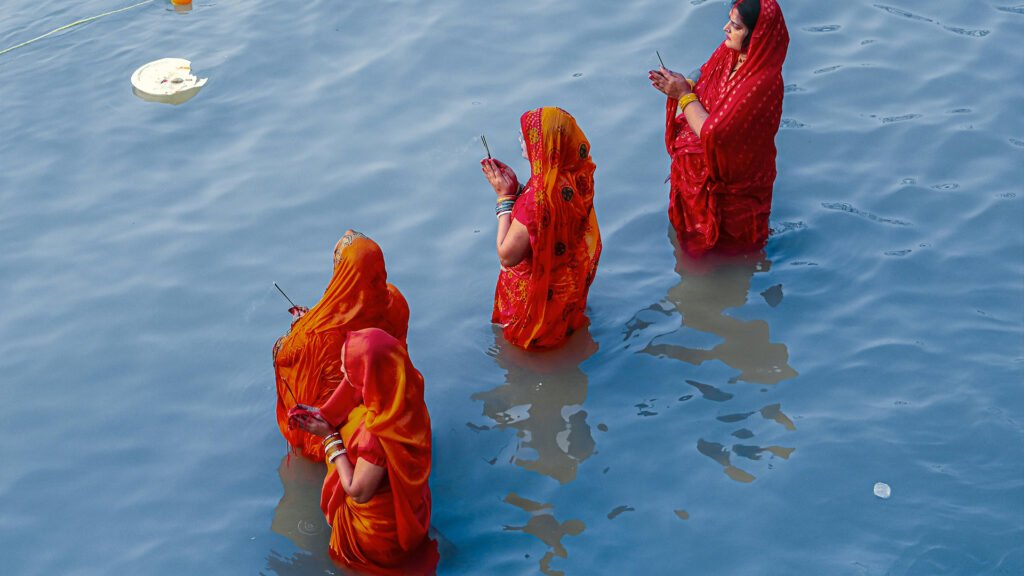
In today’s fast-moving world, where most festivals have taken new outlook, Chhath Puja feels very different. It is simple, yet deeply demanding. It asks for patience, discipline, and faith.
And still, it continues to be observed with the same dedication, generation after generation.
To understand why, it helps to look at where it comes from.
A Festival Rooted in Simplicity
Chhath Puja stands apart in the way it is practiced. There are no idols, no elaborate temple rituals, and no dependence on priests. Instead, people perform the rituals themselves, usually near rivers, ponds, or lakes.
The practices are simple, but they require great care. Devotees fast for long hours, prepare food with purity, and maintain clean surroundings. Prayers are offered to the sun during both sunset and sunrise, often while standing in water.
What truly defines Chhath is its intention. It is not about asking for something—it is about expressing gratitude. It is a quiet way of thanking the sun, which supports life every single day.
Traces of an Ancient Past
Chhath Puja is believed to be thousands of years old, with roots going back to early traditions of nature worship.
In ancient times, people looked at nature as the source of life. The sun, in particular, held great importance—it provided light, helped crops grow, and guided daily life.
Chhath carries forward that same understanding. Even today, its rituals reflect a direct connection with nature:
- prayers offered to the sun in open spaces
- rituals performed near natural water bodies
- a focus on simplicity rather than elaborate structures
This is what gives the festival its timeless quality. While the world around it has changed, the essence of Chhath has remained the same.
Stories That Travel Through Time
Over time, different stories have become associated with Chhath Puja. Each one offers a different perspective, but all of them reflect a shared idea—gratitude and devotion to the sun.
One of the earliest stories is linked to Sita. It is believed that after returning from exile, she observed Chhath to thank the Sun God. The story reflects a simple but powerful emotion—gratitude after overcoming difficult times and stepping into a new beginning.
Another story is connected to King Parikshit. Here, traditions vary slightly. In some accounts, rituals dedicated to the Sun God are believed to have helped restore prosperity and stability in his kingdom. In others, the focus is more personal, linking the practice to the well-being of family and children.
Rather than a single fixed event, this story is better understood as part of a broader belief from that time—that devotion to the sun could bring balance, protection, and well-being, both at a personal and community level.
Then there is the story of Karna, the son of the Sun God. Known for his deep devotion, Karna is believed to have offered prayers while standing in water. This practice closely resembles the core ritual of Chhath even today.
Together, these stories come from different times, but they share a common thread—a deep respect for the sun as a source of strength, life, and continuity.
Where the Tradition Took Root
Despite its ancient origins, Chhath Puja is most closely associated with Bihar and the nearby regions of eastern Uttar Pradesh and Jharkhand.
This connection comes from the way life has developed in these areas. The fertile plains, the presence of rivers like the Ganga, and a strong dependence on agriculture have shaped a deep respect for natural forces, especially the sun.
Over time, Chhath became a part of everyday life in these communities. It was passed down within families, often as a personal or collective vow, rather than being spread through institutions or organized structures. This is one reason why it remained concentrated in specific regions.
As people moved to different cities and countries, they carried the festival with them. Today, Chhath is celebrated in places like Delhi, Mumbai, and even beyond India.
Yet, wherever it is observed, it continues to carry the essence of its roots.
A Tradition That Continues to Rise
Chhath Puja has endured not because of grandeur, but because of its meaning.
It does not rely on large celebrations or decorations. Instead, it asks for something deeper—discipline, patience, and sincerity.
In a world that rarely slows down, Chhath offers a moment of pause. Standing in water, watching the sun rise or set, and offering a simple prayer creates a sense of connection that feels both grounding and timeless.
Chhath is not just a festival.
It is a reminder of the forces that quietly sustain life, every single day.