
Where the Sun Meets Faith: The Grand Ghats of Chhath in Patna and Varanasi
Where the Sun Meets Faith: The Grand Ghats of Chhath in Patna and Varanasi
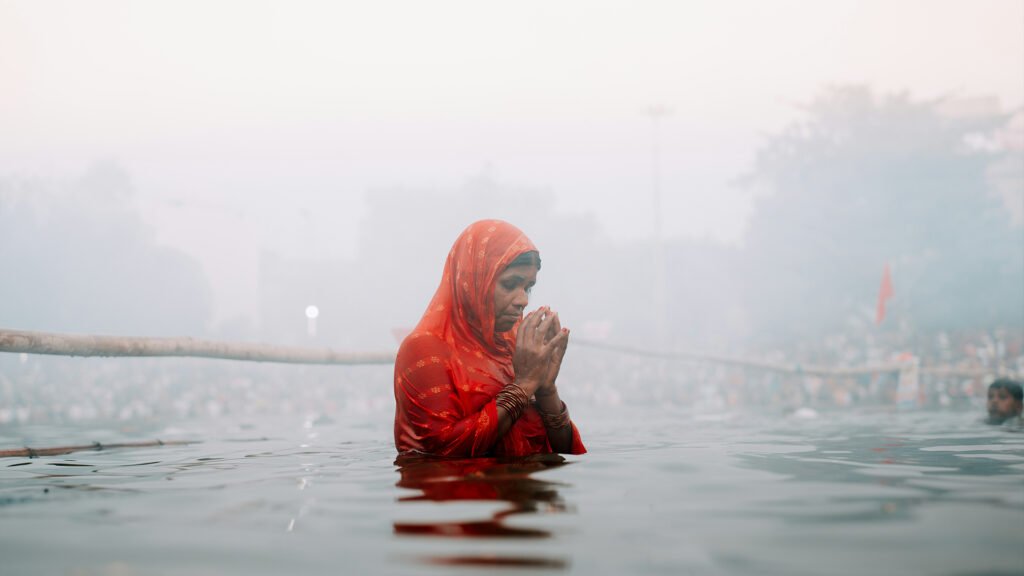
Chhath Puja is not just a festival—it is a deeply personal act of devotion, performed in silence, discipline, and unwavering faith. And nowhere does this devotion come alive more powerfully than on the ghats—where thousands stand in water, eyes fixed on the horizon, waiting for the Sun.
Among all places, two cities stand out for the sheer scale and spiritual intensity of Chhath: Patna and Varanasi.
This is where Chhath is not just celebrated—it is experienced.
Patna: The Living Heart of Chhath
If there is one place where Chhath feels most authentic and deeply rooted, it is Patna. Often called the epicenter of Chhath celebrations, the city hosts some of the largest gatherings anywhere in the world during the festival.
Every year, over 10–12 lakh devotees gather along the Ganga in Patna during the peak days of Sandhya and Usha Arghya. And within this, certain ghats become the focal points of devotion: Bans Ghat, Collectorate Ghat, & Mahendru Ghat. Each of these ghats can see around 1 to 1.5 lakh people at peak hours, standing shoulder to shoulder, yet bound by a quiet discipline.
Other ghats like Gandhi Ghat, Kali Ghat, and Digha Ghat also witness tens of thousands of devotees.
Historically, this region was known as Pataliputra—the capital of the powerful Magadha kingdom. This region is believed to be one of the earliest centers where Vedic traditions of Sun worship took root and evolved into what we now know as Chhath Puja.
The presence of the Ganga River adds another layer of sanctity. For centuries, devotees have chosen these banks as the ideal place to offer arghya to the Sun.
But what truly makes Patna the heart of Chhath is continuity.
Traditions here have not just survived—they have remained unchanged across generations. The same rituals, the same discipline, the same songs echo year after year.
In Patna, Chhath is not a spectacle—it is a collective act of faith.
- Women and men stand in waist-deep water for hours without distraction
- Prasad is prepared with strict purity—often in home kitchens, untouched by modern shortcuts
- Folk songs, passed down generations, fill the air softly
And then comes the moment—the Sun dips, the diyas flicker, and thousands raise their hands in unison.
Varanasi: Where Chhath Meets Timeless Spirituality
If Patna represents the cultural core, then Varanasi represents the spiritual amplification of Chhath.
At ghats like: Dashashwamedh Ghat, Assi Ghat
Tens of thousands gather—often between 50,000 to 1 lakh people per ghat during peak rituals. Across the city, the total number of participants reaches around 3–5 lakh devotees.
Chhath in Varanasi follows the same rituals as Bihar, but the setting transforms the experience.
Here, the ghats are not just riverbanks—they are part of a city believed to be eternal. The presence of temples, the sound of bells, and the rhythm of daily aartis blend seamlessly with Chhath rituals.
The result is something unique: The discipline of Chhath combined with the spiritual aura of one of India’s oldest cities. It feels both intimate and grand at the same time.
In Varanasi, the steps of the ghats glow with diyas. The reflection of lights dances on the Ganga. The chants are softer, but the surroundings amplify every moment.
Here, Chhath becomes not just a ritual—but a scene etched in memory.
Beyond These Cities: A Festival That Won Many Hearts
While Patna and Varanasi remain the most iconic, Chhath has expanded far beyond.
In Delhi, thousands gather at places like Kalindi Kunj, often using specially created ghats and water tanks.
Across Bihar and Jharkhand—in cities like Bhagalpur, Muzaffarpur, Gaya, and Ranchi—the festival continues with the same devotion, often along rivers, ponds, and lakes.
Even in cities like Mumbai and Bengaluru, temporary ghats recreate the experience, proving that Chhath is no longer confined to geography—it travels with faith.
Chhath Puja does not rely on grandeur to feel powerful.
And yet, at the ghats of Patna and Varanasi, grandeur emerges naturally—from numbers, from tradition, from collective belief.
Thousands stand still. The river flows quietly. The Sun rises and sets.
And in that moment, everything feels connected—nature, devotion, and time itself.