
Sharda Sinha: The Voice of Chhath Itself
Sharda Sinha: The Voice of Chhath Itself
There are some voices that don’t just sing songs—they become a part of people’s lives. And then there are rare voices like Sharda Sinha’s, which quietly turn into tradition itself. In many homes across Bihar, Jharkhand, and eastern Uttar Pradesh, Chhath Puja does begin with voice of Sharda Sinha.
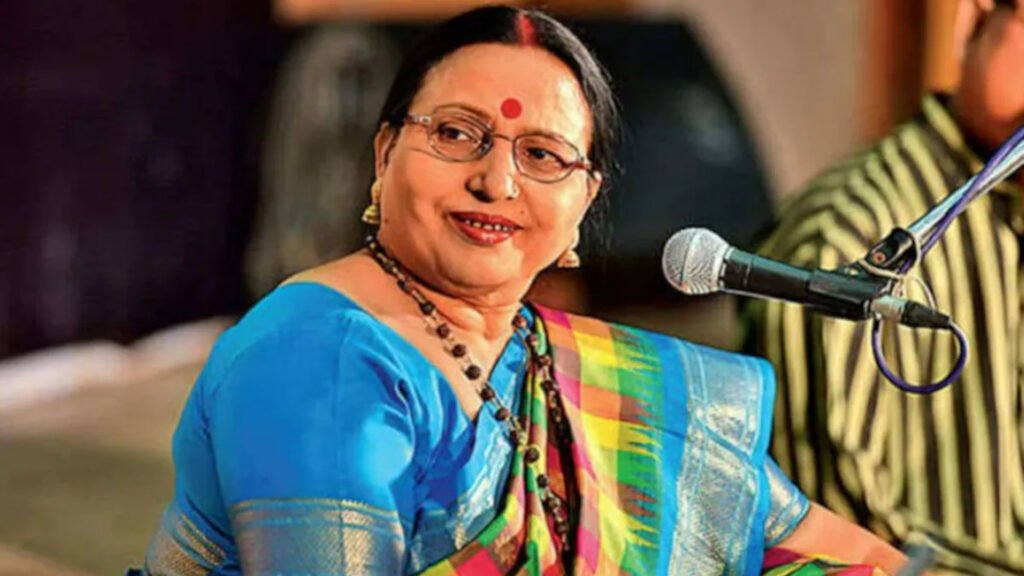
Sharda Sinha did not arrive as a commercial playback star trying to fit into trends. She came with something deeper—an authenticity that felt like it belonged to the मिट्टी (soil) itself. Singing in Maithili, Bhojpuri, and Magahi, her music carried the rhythm of everyday life, the simplicity of rural devotion, and the emotional depth of folk traditions.
At a time when folk music was often overlooked in mainstream spaces, she chose to stay true to it. That decision quietly shaped her destiny.
Her voice won hearts of millions, becoming the “voice of Chhath Puja”.
Songs like “Kelwa Ke Paat Par” and “Ho Dinanath” didn’t just become popular—they became essential. They started playing at ghats during arghya, in courtyards during prasad preparation, and in homes where families gathered in devotion.
Over time, something remarkable happened: her songs stopped being “played” and started being felt.
Today, for many devotees, performing Chhath rituals without her voice in the background feels incomplete—almost like something sacred is missing.
There is no heavy orchestration or dramatic flair in her singing. Instead, there is calmness, clarity, and devotion. Her voice doesn’t try to impress—it tries to connect. That is why elders find tradition in her songs, younger generations find identity, & devotees find emotion. Her music carries a rare sincerity. It doesn’t just describe devotion—it creates it.
Even though her work was deeply rooted in folk culture, it did not go unnoticed. Over the years, Sharda Sinha received some of India’s highest civilian honors: Padma Shri & Padma Bhushan
These awards recognized not just her talent, but her role in preserving and elevating folk traditions that might otherwise have faded with time.
Yet, if you ask those who listen to her every Chhath, they would say her biggest achievement is something else entirely—becoming a part of their lives.
There are artists who define an era, and then there are those who define an emotion. Sharda Sinha belongs to both, wining the hearts and making devotees reliving memories through her voice.
As the sun rises over rivers and devotees stand in water offering prayers, her voice flows alongside the rituals—steady, familiar, and deeply comforting.
In that moment, it becomes clear: she is not just singing about Chhath.
She is the part of devotion, for millions.